
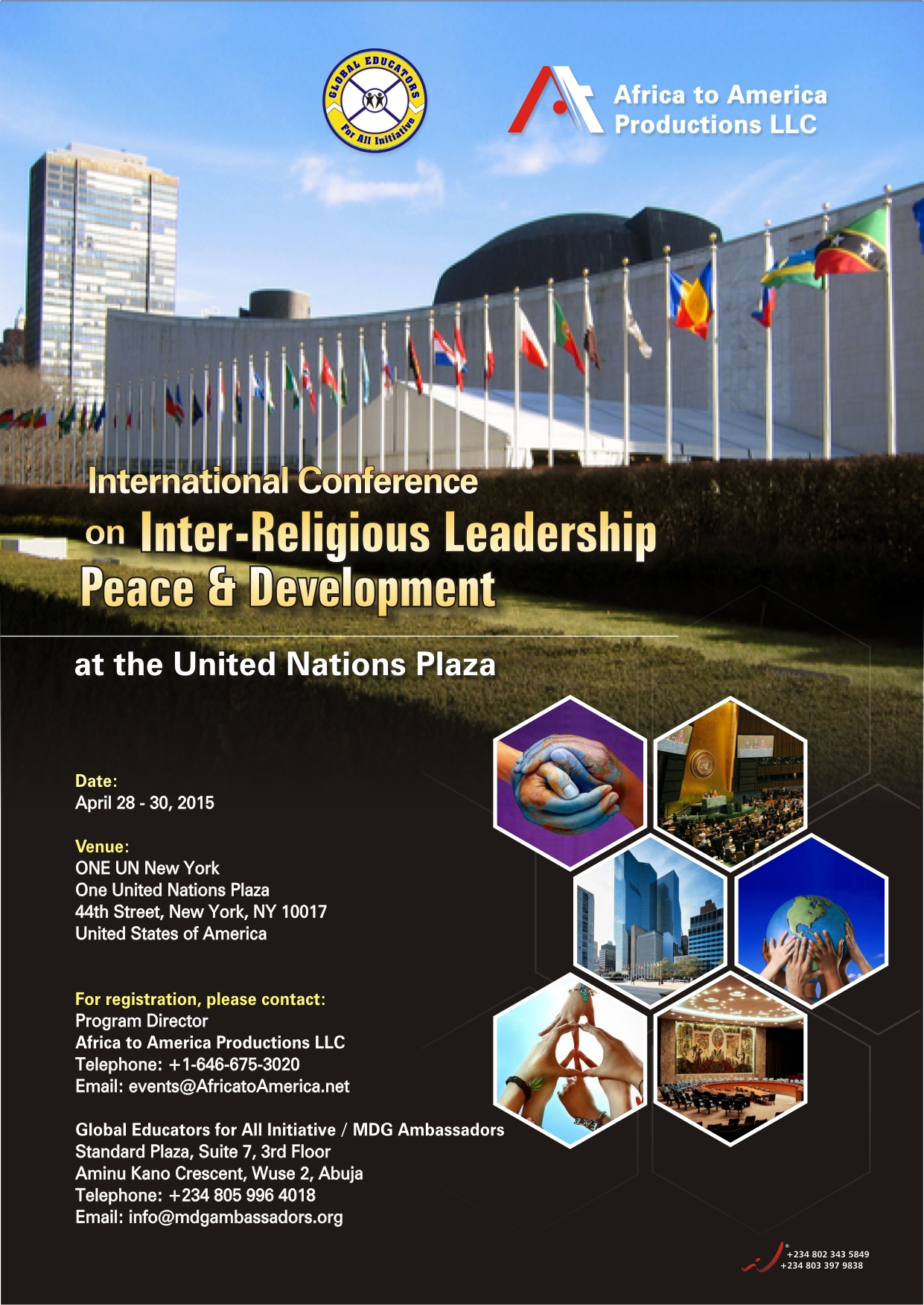
To promote peaceful co-existence in view of the challenges brought about by religious intolerance, and expose the participants to the UN peace initiatives. To promote peaceful co-existence in view of the challenges brought about by religious intolerance, and expose the participants to the UN peace initiatives.
The Conference on Peace & Inter-Religious Relations, held at the United Nations, serves as a global forum for fostering dialogue, mutual understanding, and cooperation among diverse religious and cultural communities. Recognizing the critical role of interfaith harmony in building sustainable peace, this conference aims to address religious intolerance, promote coexistence, and strengthen global partnerships for peace.
Objectives:
- Promote Interfaith Dialogue: Foster mutual respect and understanding among diverse religions, cultures, and belief systems.
- Combat Religious Intolerance: Address the root causes of hate speech, discrimination, and violence based on religion or belief.
- Strengthen Peacebuilding Efforts: Highlight the role of faith-based organizations and religious leaders in promoting peace and reconciliation.
- Support Global Partnerships: Build alliances between governments, religious institutions, and civil society to address shared challenges.
- Advance Sustainable Development: Align inter-religious cooperation with the Sustainable Development Goals (SDGs), particularly SDG 16 (Peace, Justice, and Strong Institutions).
Program Highlights:
- Keynote Addresses: Insights from UN officials, global religious leaders, policymakers, and scholars on the role of religion in peace and development.
- Thematic Discussions:
- Addressing religious intolerance and extremism.
- Promoting education as a tool for interfaith understanding.
- The role of women and youth in inter-religious peacebuilding.
- Panel Sessions: Strategies for fostering peace and reconciliation through faith-based initiatives.
- Workshops: Practical capacity-building on inter-religious dialogue, conflict prevention, and cultural understanding.
- Case Studies: Sharing successful interfaith peacebuilding projects and their impact in diverse regions.
- Cultural Programs: Showcasing art, music, and traditions that reflect religious and cultural diversity.
Expected Outcomes:
- Policy Recommendations: Development of strategies to promote inter-religious cooperation and combat intolerance.
- Strengthened Networks: Building partnerships between faith-based organizations, governments, and international stakeholders.
- Practical Tools: Equipping participants with frameworks for implementing interfaith dialogue at community and global levels.
- Commitments to Action: Encouraging faith leaders and institutions to actively contribute to global peace and reconciliation efforts.
This conference highlights the importance of unity in diversity, emphasizing that cooperation among religions and cultures is essential for building peaceful, inclusive, and sustainable societies. By bringing together voices from around the world, it strengthens collective efforts to address global challenges and advance peace.